












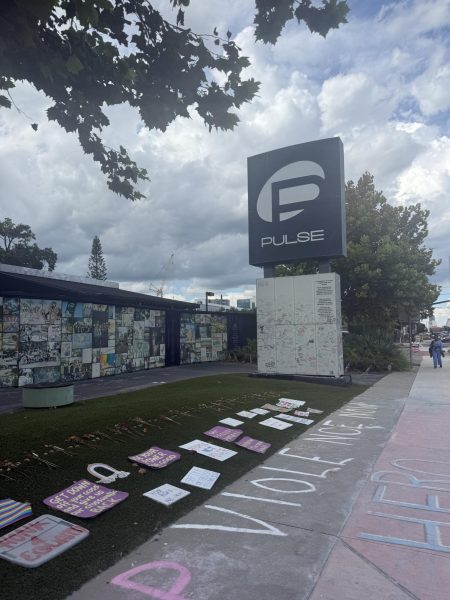
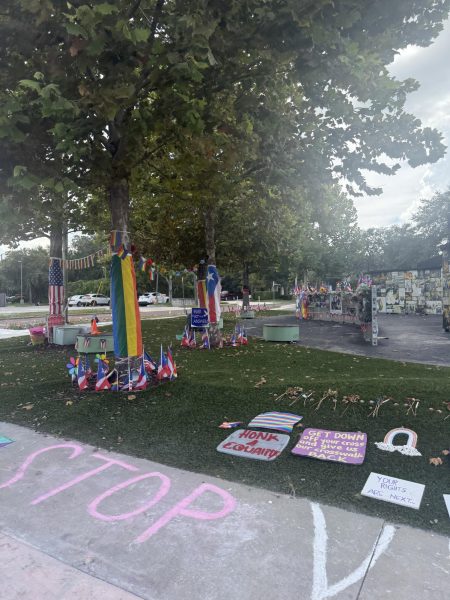
On June 12, 2016, the second most fatal mass shooting in modern-day United States history occurred in Orlando, Florida. This tragic incident, commonly referred to as the Pulse nightclub shooting, cost 49 people their lives and left 53 people injured. As reported by npr.org, the night of the shooting, “Was Latin Night at Pulse…and the place was packed with patrons…from the U.S., Puerto Rico, the Dominican Republic, Mexico, and elsewhere.” Not only was the Pulse nightclub a location blossoming with diversity during the time of its existence, but it was also recognized as being one of the prime LGBTQ+ friendly spots in Orlando. Like any mass shooting, it was a situation of irrational, unnecessary death, and none of the lives lost in this shooting can ever truly be replaced. While this may be true, those lost can be memorialized, which is exactly what was done by the State of Florida in 2017 with the installation of the rainbow crosswalk directly adjacent to Pulse on South Orange Avenue.
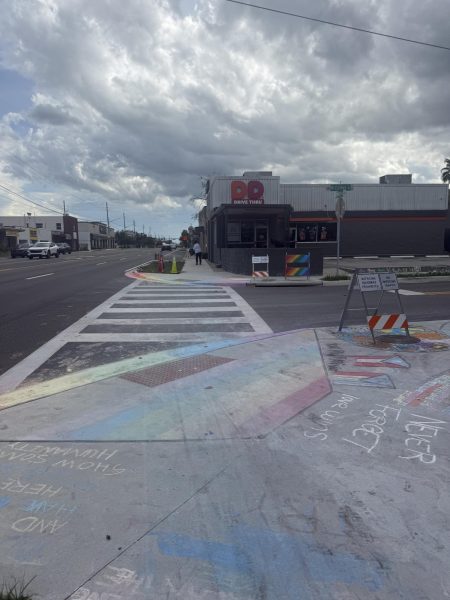
This vibrant crosswalk was created to serve as a memorial for the 49 lives that were taken during the 2016 shooting. Its bright colors, spanning from red all the way to purple, were not only eye-catching, but arguably brought light into the surrounding area while still encouraging acknowledgment of the tragedy that occurred there more than nine years ago. The rainbow appearance served to create a direct tie between the identities of many of the individuals killed during the shooting while also offering a welcoming, generic, and accepting form of art in the heart of Downtown Orlando.
Recently, the topic of the Pulse nightclub and the true significance of the crosswalk memorial has made its way back into the spotlight of local Orlando, and even national news. Under the command of Florida Governor Ron DeSantis, the crosswalk was painted over by the Department of Transportation on August 20, 2025, in the middle of the night. According to wesh.com, “City officials said they were not notified before the removal, which occurred under the cover of darkness.” This news station also reported that the Florida Department of Transportation’s Secretary, Mr. Jason Perdue’s, justification for erasing the memorial and its message was that street art is, “Not allowed and…not compliant with state federal standards.” Under Florida law, the portion of Orange Avenue on which the rainbow crosswalk was painted is designated state property. However, much speculation is circulating that the state’s motives in removing the memorial were heavily based on political and ideological bias rather than the simple redevelopment of state restrictions.
Former United States Congressman Charlie Crist detailed how he sees the erasing of the Pulse crosswalk as, “An extension of Desantis’s targeting of minority groups,” as reported by theguardian.com. One could argue that, in erasing the crosswalk, government officials looked to reduce the emphasis on DEI (Diversity, Equity, Inclusion) that this memorial portrayed. However, many individuals questioned whether or not their rights to freedom of speech and expression, as designated in the First Amendment of the United States Constitution, were infringed upon with the erasing of the rainbow crosswalk.
In her official statement regarding the erasing of the Pulse crosswalk, Representative Anna V. Eskamani shared how the rainbow crosswalk was, “Never a political statement, and caring about people of all backgrounds is not meant to be a political statement.” In this explanation of the crosswalk’s purpose itself, Representative Eskamani expertly captured the idea that the loss and memorialization of human lives is not meant to be twisted into a rivalry to pit one side against another, but rather to unite society as one. The desire was to help those who have experienced loss, cope with their pain so they may continue living with compassion and love.
An authentic form of unity can be seen in the success of Chef Trina Gregory’s efforts to reinvigorate the memorialization efforts for Pulse nightclub victims. Ms. Gregory is the owner of Se7enBites, a hotspot for breakfast, lunch, and brunch, located on Primrose Drive in the Milk District of Orlando. Following the painting over of the rainbow Pulse memorial, she organized an event which she called, “Parking Space for Pride – A Rainbow Connection,” for which she received 1,000 applications from individuals eager to participate, as reported by nbcnews.com. During this event, registrants participated in decorating numerous parking spots in the private Se7enBites parking lot, with a wide array of colors, designs, and patterns to make up for the lost art at the Pulse crosswalk memorial. When asked about her purpose behind hosting the event, Chef Trina Gregory shared how it was, “More an act out of love,” rather than, “A political statement.” According to nbcnews.com, she also stated how the event was, “A way for the art community to come together and spread some joy for all of our Orlando community.”
The event helped accomplish this goal of spreading joy despite all the controversy that followed the erasing of the Pulse nightclub rainbow crosswalk. Orlando’s dedicated residents and visitors were able to honor the lives lost in the unforgivable event that was the 2016 shooting. Civilian unity in “The City Beautiful” serves to encourage individuals to see the value of diverse forms of remembrance in society, regardless of political opinions, as the memorialization of human lives is not to be deemed ideologically polarized.
punishment by officials. (Fiona Knight)