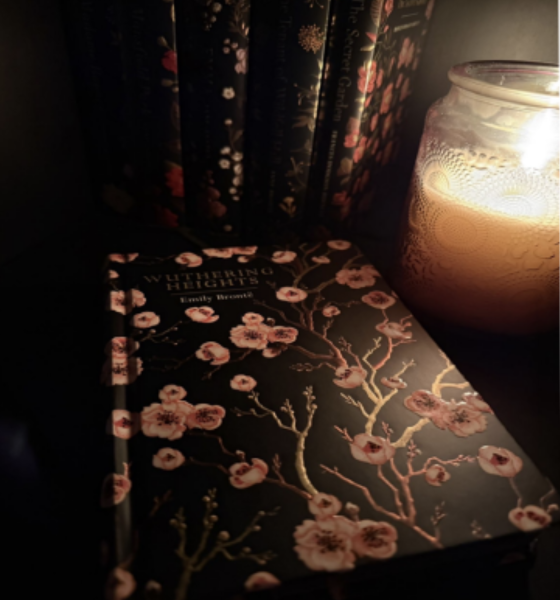





























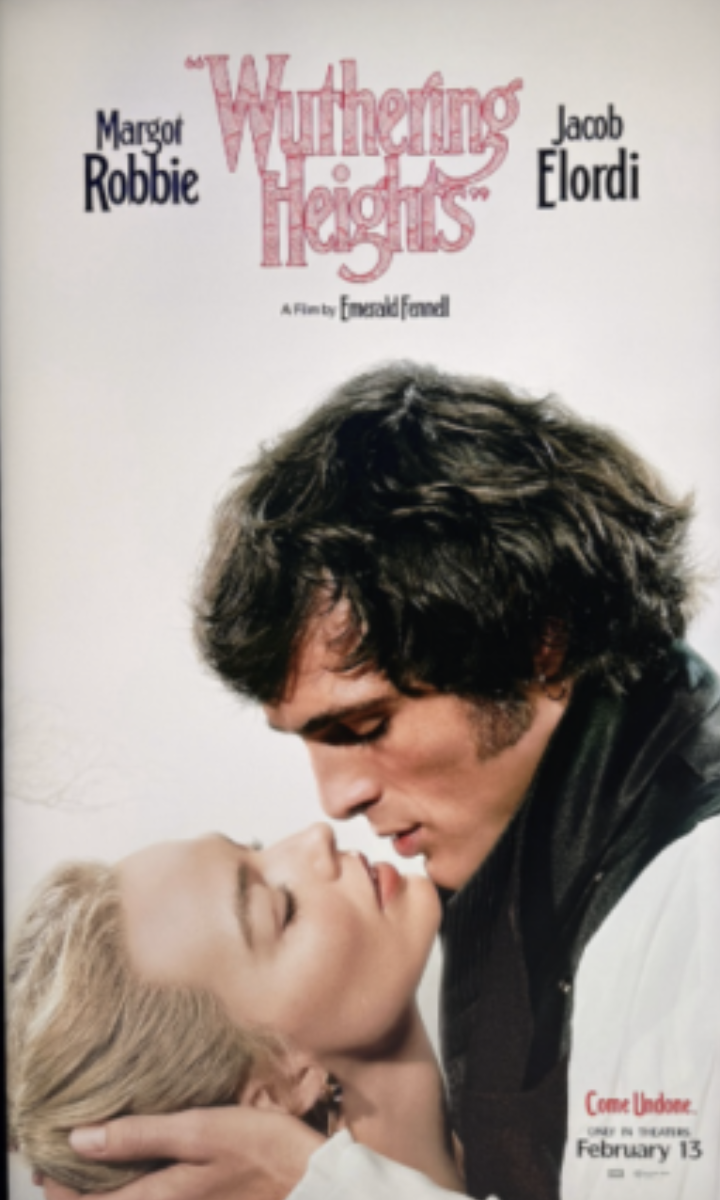
When thinking of a classic literary materpiece, Wuthering Heights immediately comes to mind. This story of Catharine and Heathcliff is not defined by love or romance but by obsession, manipulation, and revenge. Emily Brontë published the story of Catherine Earnshaw and Heathcliff in November 1847. Even 178 years later, Wuthering Heights still holds an important place in literature as it continues to question the dark portrayal of love.
Catherine and Heathcliff will soon be transformed from page to stage in February of 2026. Director Emerald Fennell, who is also known for directing Saltburn: the film that quickly rose to fame for its unsettling scenes and shocking moments, is raising questions about how her adaptation of the classic Wuthering Heights will be portrayed on screen. The movie stars Margot Robbie as Catherine Earnshaw and Jacob Elordi as Heathcliff. Robbie, who is also producing the film, has described the project as, “This generation’s Titanic” to British Vogue, a statement that has raised eyebrows among fans of the book. While the movie Titanic is remembered for its romantic sacrifices and endless love, Wuthering Heights can be interpreted as a warning of toxic love rather than romantic love. Director Emerald Fennell also states to British Vogue that her goal was to make a film, “That people can’t seem to get enough of.” This causes readers to question the faithfulness to the book, as the novel leaves readers disturbed and uneasy after reading.
These contrasts highlight concerns about the adaptation. Fans wonder whether the film will stay true to the original story or if it will romanticize the obsession and manipulation into passion and love. Emily Brontë’s portrayal of Catherine and Heathcliff’s story was never meant to raise loving feelings but rather to serve as a warning about These contrasts highlight concerns about the adaptation. Fans wonder whether the film will stay true to the original story or if it will romanticize the obsession and manipulation into passion and love. Emily Brontë’s portrayal of Catherine and Heathcliff’s story was never meant to raise loving feelings but rather to serve as a warning about emotional dependence, obsession, and toxic love. Their story shows how their bad choices not only harm themselves but also everyone around them. Catherine and Heathcliff’s tragic ending makes it clear that they don’t represent love, but destruction. Fennell’s notorious ability to capture darkness, proven in Saltburn, could highlight Brontë’s message, but there is a chance that it may be taken too far and captured as romantic.
The film is also set to be released in theaters on Valentine’s Day, giving the impression of a romantic love story released on the holiday of love. But this contradicts Brontë’s original intention for the story. Early glimpses into the film portray very modern costumes and accessories paired with a classic period piece. This creative liberty may cause viewers to feel disconnected from the
original setting of the story, as it mixes modern visuals with historic and classic language. Another creative liberty taken by Fennell is the movie’s soundtrack, which will be produced by Charli XCX, who is famously known for her modern-day pop songs. The choice to include her voice in a story set in the 1700s and early 1800s has raised different reactions.
The anticipation for Wuthering Heights remains high, as the story will forever be cherished for its emotional intensity and complexity. The new adaptation offers the chance to introduce the classic story to new audiences and generations. Whether the adaptation will honor Emily Brontë’s original thematic message, or reshape it into a romanticized version, remains to be judged.